
All cryptocurrencies
These crypto coins have their own blockchains which use proof of work mining or proof of stake in some form. They are listed with the largest coin by market capitalization first and then in descending order https://xiaomidroneturkiye.com/. To reorder the list, just click on one of the column headers, for example, 7d, and the list will be reordered to show the highest or lowest coins first.
When evaluating the crypto market capitalization, it’s important to have a historical perspective of how the size of the cryptocurrency market has changed over time. We provide historical crypto market cap data showing the total crypto market cap at the end of each year since 2013.
CoinCodex provides all the data you need to stay informed about cryptocurrencies. You can find cryptocurrency charts for more than 41344 coins, and access key data such as up-to-date prices, all-time high price, cryptocurrency market cap, trading volume and more. The crypto charts provided by CoinCodex are incredibly flexible – you can watch real-time prices or select between 8 pre-defined time frames, ranging from 24 hours to the entire price history of the coin. If you need more precision, you can select a custom date range. CoinCodex also gives you the ability to compare the price action of different cryptocurrencies on a single chart.
IEO stands for Initial Exchange Offering. IEOs share a lot of similarities with ICOs. They are both largely unregulated token sales, with the main difference being that ICOs are conducted by the projects that are selling the tokens, while IEOs are conducted through cryptocurrency exchanges. Cryptocurrency exchanges have an incentive to screen projects before they conduct a token sale for them, so the quality of IEOs tends to be better on average than the quality of ICOs.
The Bitcoin market cap is currently 2,044.52 billion. We arrive at this figure by multiplying the price of 1 BTC and the circulating supply of Bitcoin. The Bitcoin price is currently $ 102,926 and its circulating supply is 19.86 million. If we multiply these two numbers, we arrive at a market cap of 2,044.52 billion.
Why do all cryptocurrencies rise and fall together
Cryptocurrency trading is done through Lunar Block. Lunar Block is not regulated by the Danish Financial Supervisory Authority (Finanstilsynet). That means you won’t have the same protection as when trading e.g. stocks or other regulated assets.
Government policies can either boost or hinder the cryptocurrency market. For instance, after the U.S. presidential election, bitcoin’s price surged from $67,000 to over $104,000, while Ethereum also saw a sharp rise. This trend reflected growing optimism about potential regulatory clarity. Similarly, the establishment of a “Strategic Bitcoin Reserve” caused slight price increases, showing how government actions can sway market sentiment.

Cryptocurrency trading is done through Lunar Block. Lunar Block is not regulated by the Danish Financial Supervisory Authority (Finanstilsynet). That means you won’t have the same protection as when trading e.g. stocks or other regulated assets.
Government policies can either boost or hinder the cryptocurrency market. For instance, after the U.S. presidential election, bitcoin’s price surged from $67,000 to over $104,000, while Ethereum also saw a sharp rise. This trend reflected growing optimism about potential regulatory clarity. Similarly, the establishment of a “Strategic Bitcoin Reserve” caused slight price increases, showing how government actions can sway market sentiment.
Projects with a high percentage of their total supply already in circulation often show more stable price movements. For example, cryptocurrencies with over 80% of their supply in circulation tend to experience less volatility. However, projects with less than 50% of their supply in circulation can pose risks of dilution, which may negatively impact their value. Understanding these supply metrics is crucial for investors navigating the cryptocurrency market.
These psychological factors contribute to market volatility. Investors who act impulsively often face negative outcomes, especially during periods of extreme price fluctuations. Understanding these dynamics can help investors make more informed decisions and avoid falling victim to emotional trading.
Do all cryptocurrencies use blockchain
Blockchain can also be used to record and transfer the ownership of different assets. This is currently very popular with digital assets like NFTs, a representation of ownership of digital art and videos.
On some blockchains, transactions can be completed and considered secure in minutes. This is particularly useful for cross-border trades, which usually take much longer because of time zone issues and the fact that all parties must confirm payment processing.
Many blockchain networks operate as public databases, meaning anyone with an internet connection can view a list of the network’s transaction history. Although users can access transaction details, they cannot access identifying information about the users making those transactions. It is a common misperception that blockchain networks like Bitcoin are fully anonymous; they are actually pseudonymous because there is a viewable address that can be associated with a user if the information gets out.
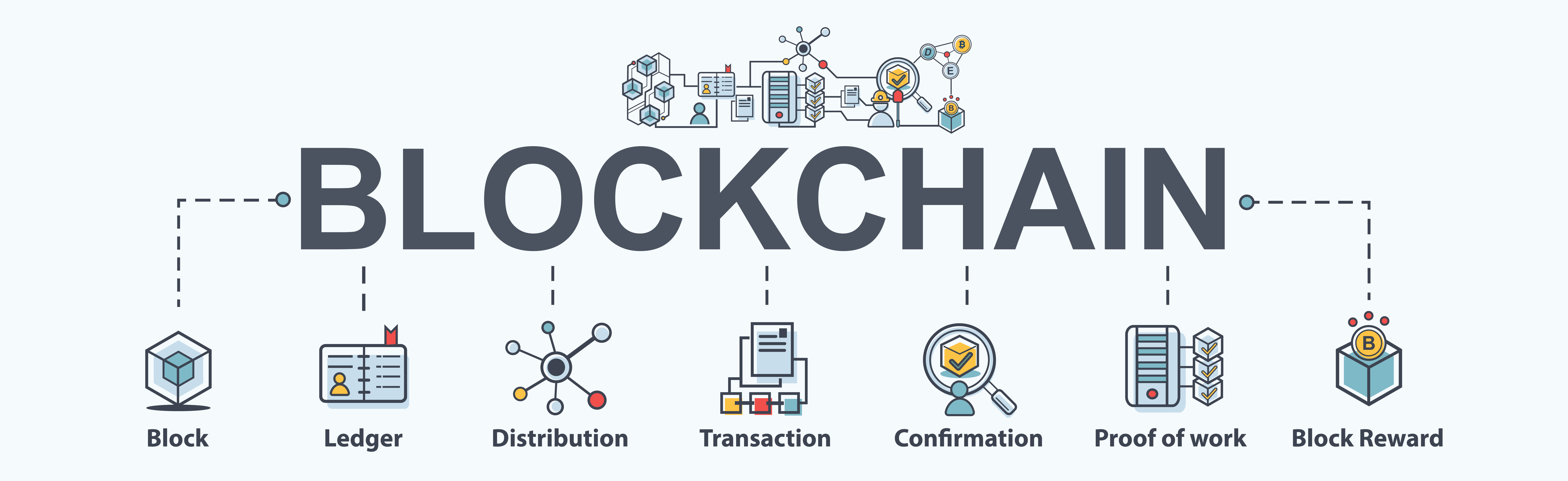
Blockchain can also be used to record and transfer the ownership of different assets. This is currently very popular with digital assets like NFTs, a representation of ownership of digital art and videos.
On some blockchains, transactions can be completed and considered secure in minutes. This is particularly useful for cross-border trades, which usually take much longer because of time zone issues and the fact that all parties must confirm payment processing.
Many blockchain networks operate as public databases, meaning anyone with an internet connection can view a list of the network’s transaction history. Although users can access transaction details, they cannot access identifying information about the users making those transactions. It is a common misperception that blockchain networks like Bitcoin are fully anonymous; they are actually pseudonymous because there is a viewable address that can be associated with a user if the information gets out.